Interpretation | blood gas analysis
Step-by-step diagnostics for blood gas analysis (BGA)
| (a) | pH | elevated | → | alkalosis |
| normal | → | healthy or compensated disturbance | ||
| reduced | → | acidosis | ||
| (b) | pCO2 | Would this pCO2 level be responsible for this pH value? | ||
| if yes | → | respiratory (or combined) disturbance | ||
| if no and pCO2 is normal | → | no compensation | ||
| if no and pCO2 altered in opposite direction | → | respiratory compensation | ||
| (c) | BE | Would this BE be responsible for this pH value? | ||
| if yes | → | non-respiratory (or combined) disturbance | ||
| if no and BE normal | → | no compensation | ||
| if no and BE altered in opposite direction | → | non-respiratory compensation | ||
Examples
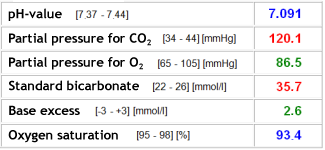
(a) pH lowered → acidosis
(b) pCO2 elevated. Since CO2 = acid, this pCO2 would cause acidosis → respiratory acidosis
(c) BE normal → no compensation
Findings
Respiratory non-compensated acidosis.

(a) pH reduced → azidosis
(b) pCO2 elevated → respiratory acidosis
(c) BE elevated → non-respiratory compensation
Findings
Respiratory acidosis, non-respiratory partially compensated.

(a) pH normal → healthy or complete compensation
(b) pCO2 elevated → either respiratory acidosis or respiratory compensation of alkalosis
(c) BE elevated → either non-respiratory alkalosis or non-respiratory compensation of acidosis
Findings
In this case, two possible diagnoses may be considered:
1. compensated respiratory acidosis
2. compensated non-respiratory alkalosis
The diagnosis may be made based on clinical findings. The patient displayed respiratory insufficiency in association with COPD treated with oxygen therapy, thus:
compensated respiratory acidosis
Non-respiratory alkalosis is also less common than respiratory acidosis and are rarely completely compensated since hypoxia would arise due to hypoventilation and being more damaging than mild alkalosis.